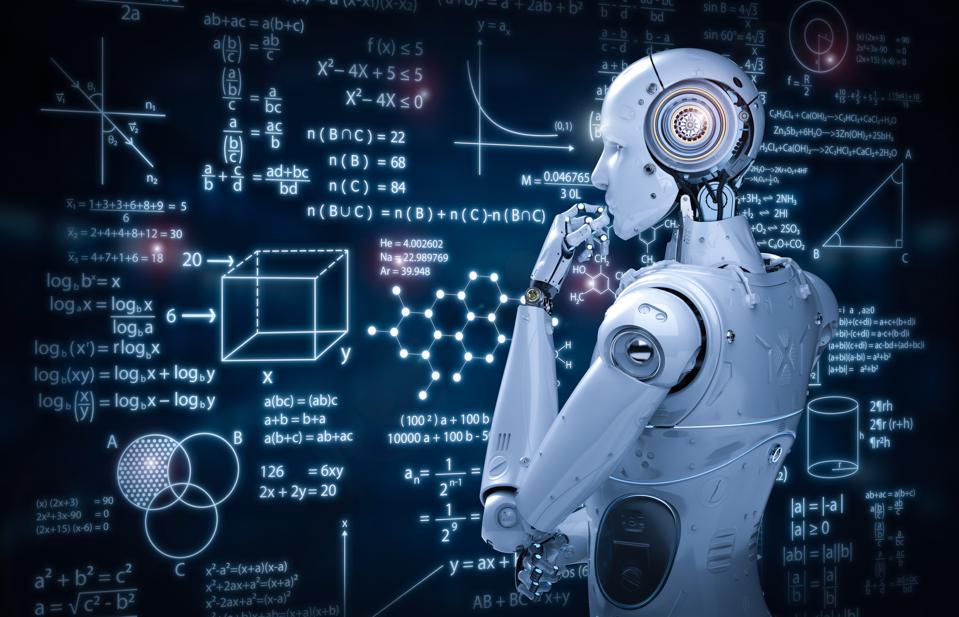
Artificial Intelligence (AI) is the broader concept of machines being able to perform tasks that would normally require human intelligence such as visual perception, speech recognition, decision-making, and language translation. Machine Learning (ML) is a subset of AI that focuses on the development of algorithms and models that allow machines to learn from data and improve over time without being explicitly programmed.
In other words, AI is the bigger picture that includes various technologies like ML, robotics, and natural language processing, while ML focuses specifically on algorithms and models to learn from data.
There are three main types of machine learning:
- Supervised Learning: In this type of machine learning, the algorithm is trained on labeled data, which means the output (label) is already known and the algorithm tries to learn the relationship between the inputs and the outputs. Examples of supervised learning include linear regression, logistic regression, and decision trees.
- Unsupervised Learning: In unsupervised learning, the algorithm is not provided with labeled data and is instead left to find patterns and relationships on its own. Clustering algorithms such as k-means and hierarchical clustering are examples of unsupervised learning.
- Reinforcement Learning: Reinforcement learning involves an agent learning through trial and error. The agent is provided with a reward for certain actions and penalized for others, and it adjusts its behavior accordingly to maximize its rewards. Examples of reinforcement learning include playing a video game or controlling a robot.
These are the main categories of machine learning, but there are also other types such as semi-supervised learning, deep learning, and transfer learning.
Your email address will not be published. Required fields are marked *